FLOW: Modern Wastewater Infrastructure for Stronger Rural Communities
Project Overview
Many rural communities like Cambridge, NY rely on aging septic systems that were never designed to support today’s population, environmental standards, or economic growth. First Learn to Optimize Water (FLOW) is working to modernize wastewater infrastructure through partnership with NEED to install a new innovative, decentralized treatment systems designed specifically for small rural towns.
By combining advanced treatment technology with smaller footprint, practical rural deployment models, FLOW helps communities protect public health, preserve water quality, and unlock new economic opportunities — while keeping infrastructure costs manageable.
Project at a Glance
Location: Village of Cambridge, New York
Technology Approach: Packaged treatment plants that allow faster installation timelines and lower infrastructure costs. Capacity could accommodate wastewater for the Village and Town of Cambridge, NY
Project Readiness: FLOW has partnered with NEED to identify initial land parcels for treatment facilities and potential funding pathways
Development Timeline: Modular infrastructure designed for phased development and faster installation than traditional centralized systems
Community Impact: Protects drinking water, reduces septic failures, and supports long-term rural economic growth
Economic Opportunity: Enables agricultural irrigation reuse, nutrient recovery for fertilizer, renewable biogas energy, and green job creation
A modern wastewater initiative to protect public health and drinking water
A local infrastructure project supporting agriculture and water reuse opportunities
An opportunity to address and reduce septic system failures
A wastewater facility that houses all systems in one small footprint building
Not a large urban sewage plant
Not an open outdoor system with multiple structures
Not reducing water access
Not increasing cost for local residents
Essential Infrastructure for Healthy Communities
Reliable wastewater systems are one of the most important foundations of a healthy, growing community. They protect drinking water, safeguard rivers and farmland, and support the homes and businesses that allow rural communities to thrive.
Across many rural areas, aging septic systems are reaching the limits of what they were designed to handle. As towns grow and environmental standards evolve, communities need infrastructure that can protect public health while supporting responsible economic development and future population growth.
FLOW works with rural communities to design modern wastewater systems that meet today’s needs while preparing for the future. By modernizing this essential infrastructure, communities can protect their natural resources, reduce costly septic failures, and create new opportunities for agriculture, industry, and local job creation.

Why Communities Are Modernizing Wastewater Systems Now
Protecting Public Health
Preventing Costly Septic Failures
Supporting Economic Growth
Protecting Local Ecosystems
A Foundation for Rural Opportunity
How Modern Wastewater Infrastructure Strengthens Rural Communities
Protecting Drinking Water
Supporting Homeowners & Property Values
Strengthening Agriculture
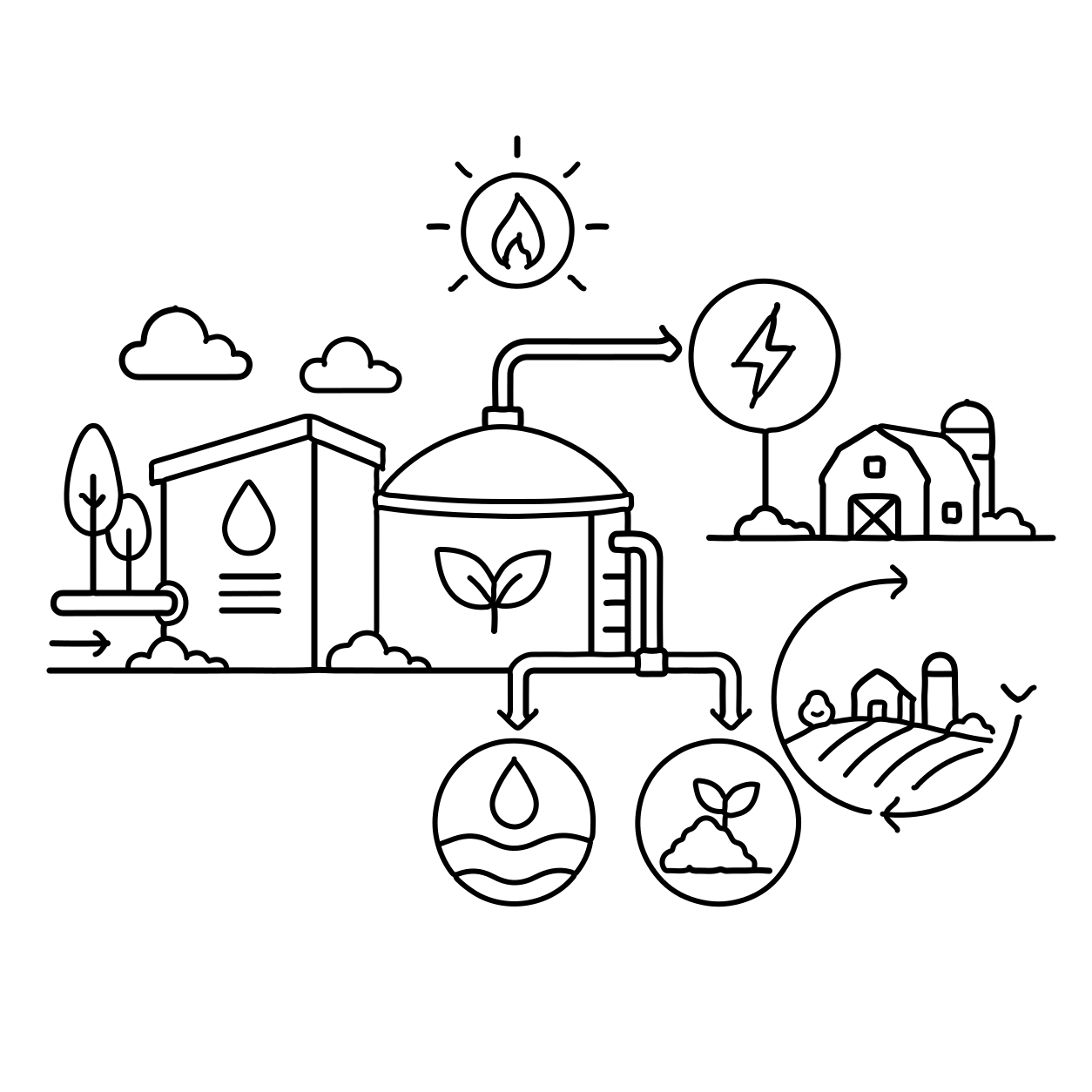
Unlocking Renewable Resources

Creating Local Jobs & Economic Opportunity
Protecting Water, Land, and Community Health
Designed for Long-Term Environmental Protection
Water Quality Protection
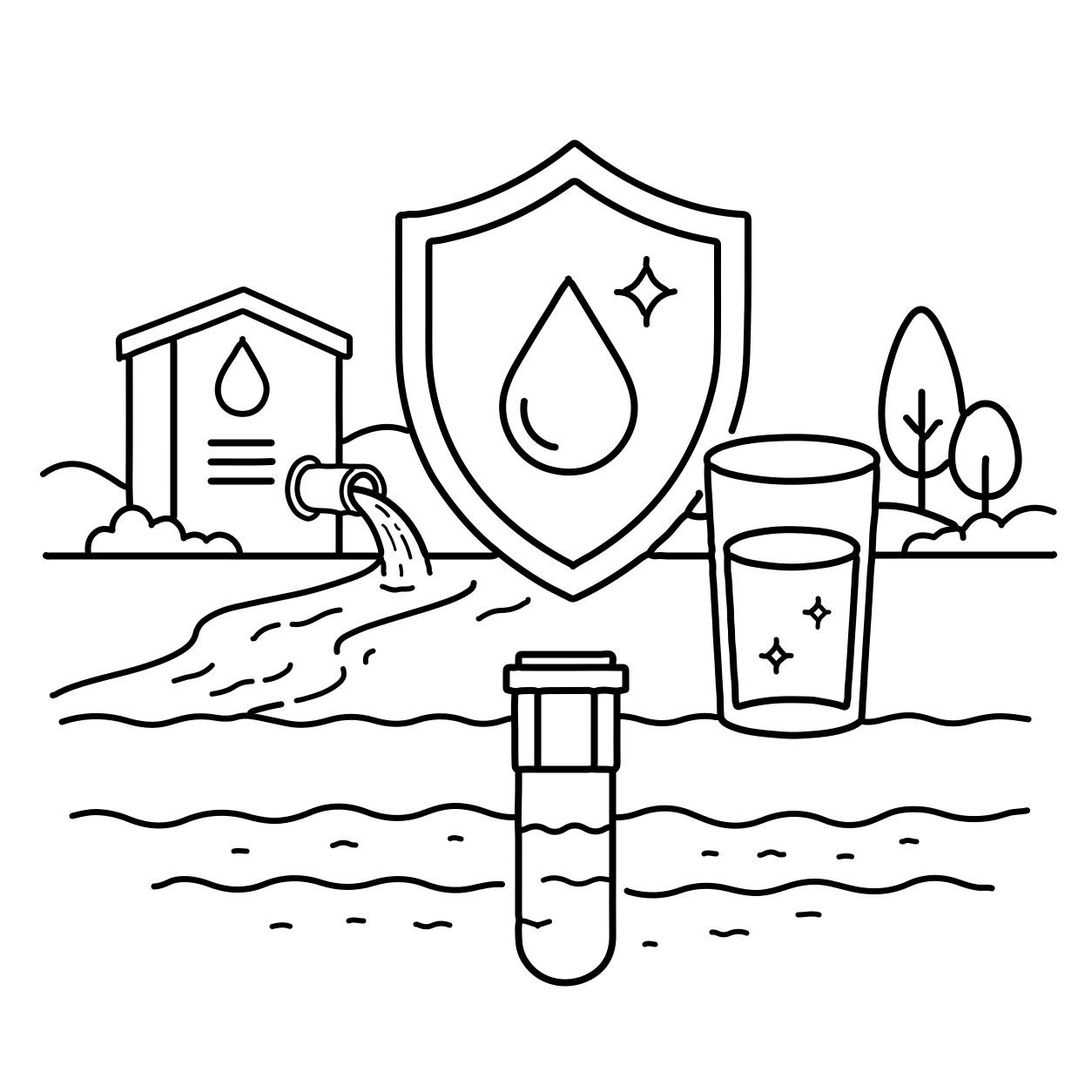
Advanced treatment processes help prevent contamination of groundwater, streams, and local drinking water sources.
Responsible Nutrient Management
Modern systems reduce nutrient runoff that can affect rivers, lakes, and agricultural ecosystems.
Water Reuse Opportunities
Treated water can support irrigation and other beneficial uses, reducing strain on local water supplies.
Sustainable Resource Recovery
Wastewater systems can generate renewable energy and recover valuable nutrients that support agriculture.
Practical Infrastructure Designed for Rural Communities
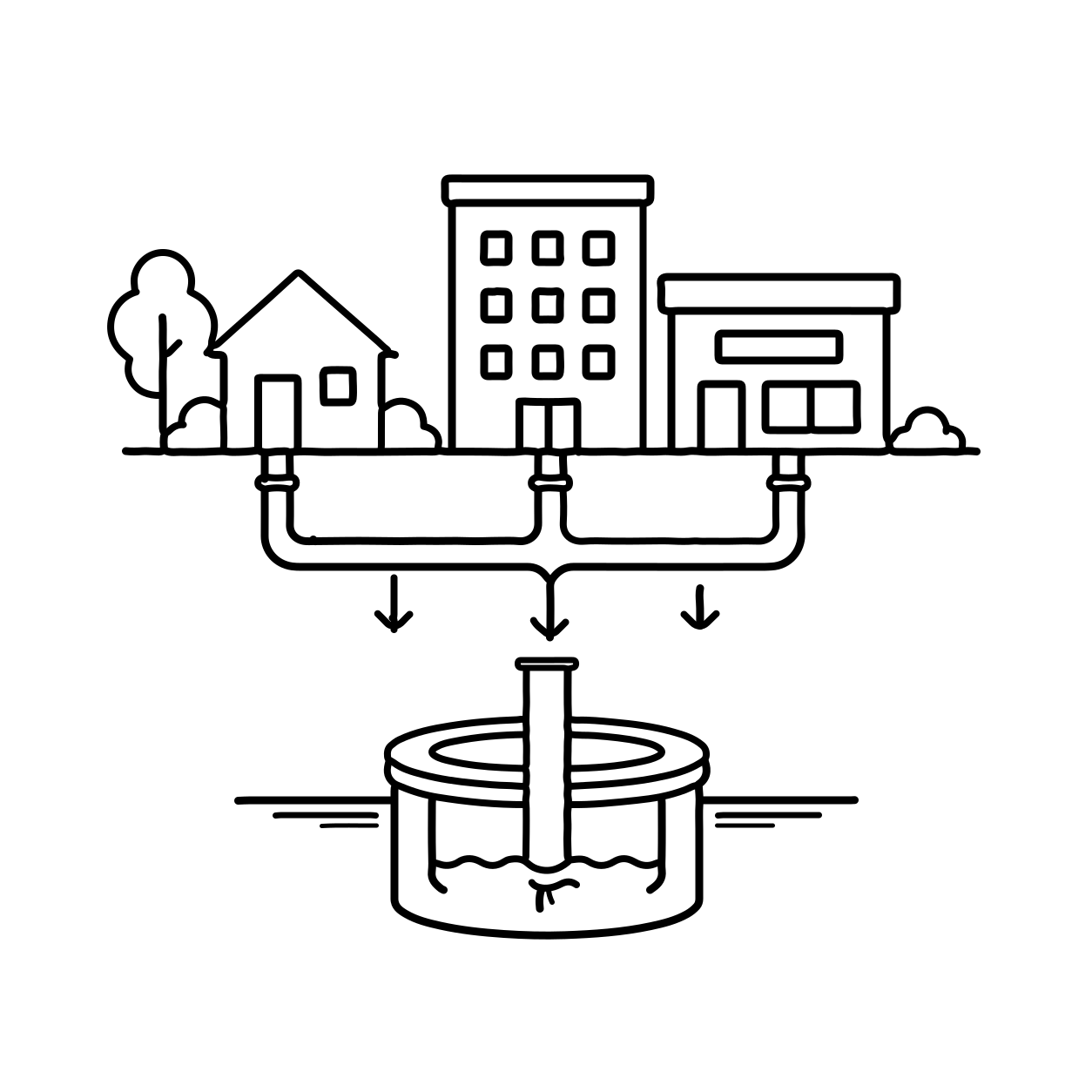
Wastewater Collection
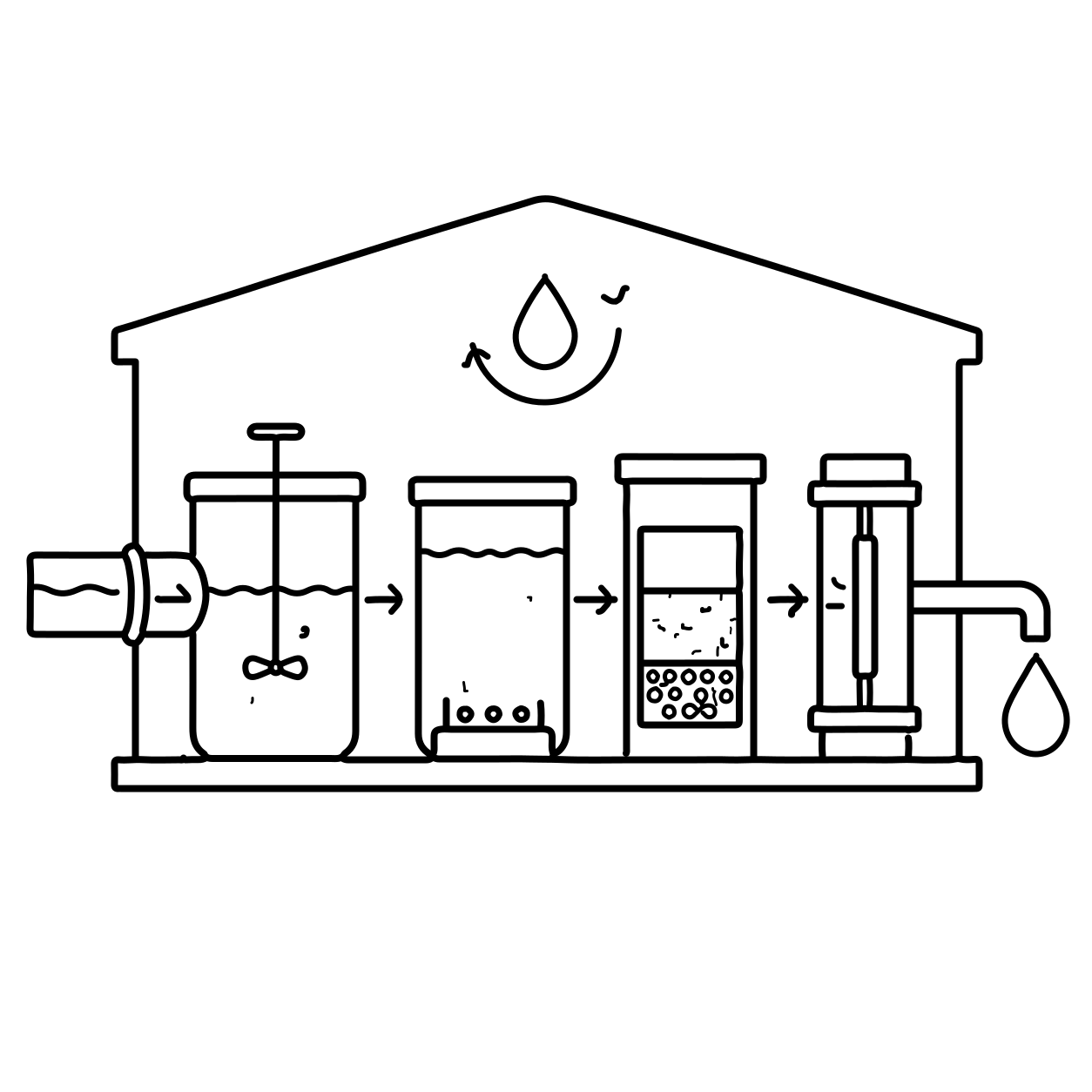
Advanced Treatment
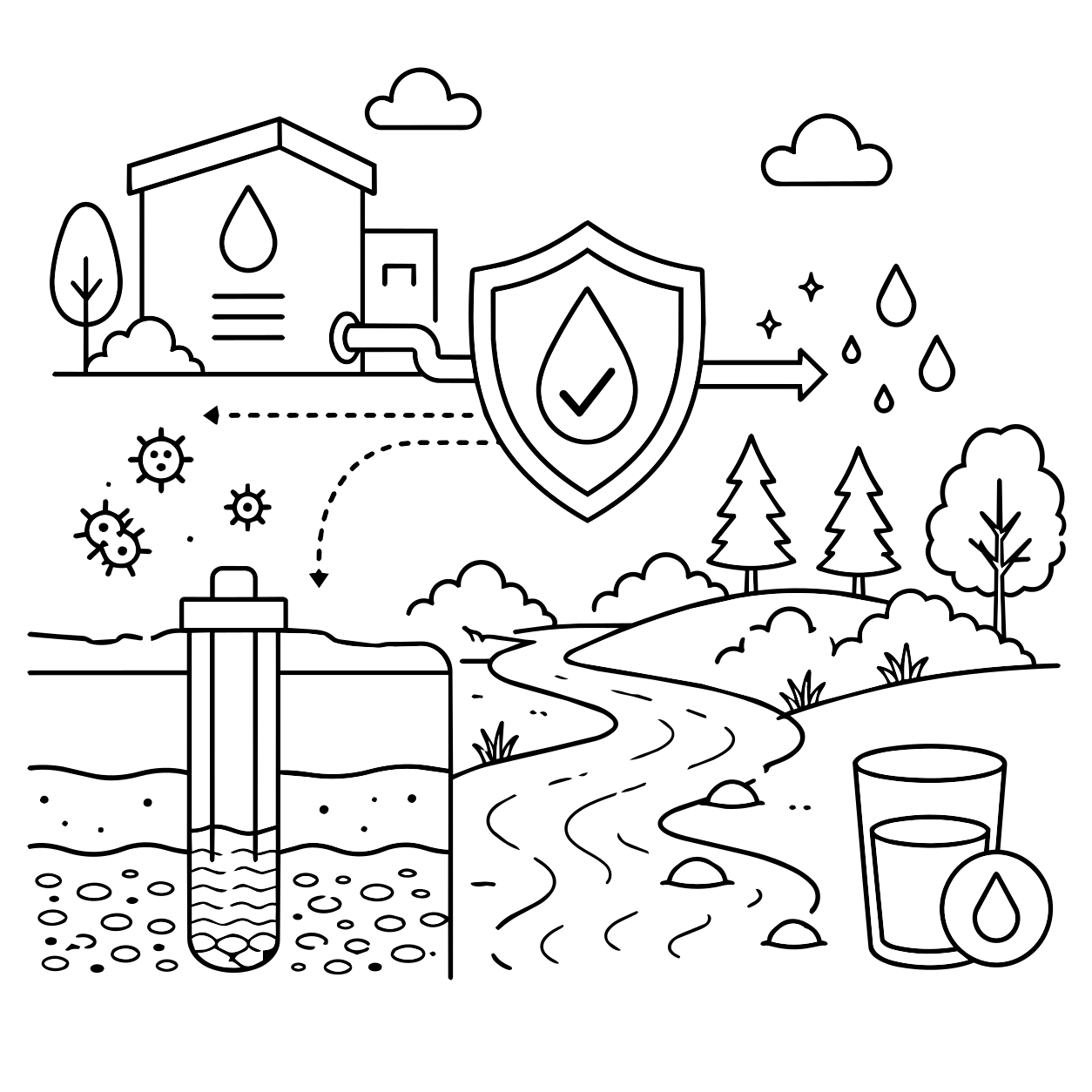
Resource Recovery & Reuse
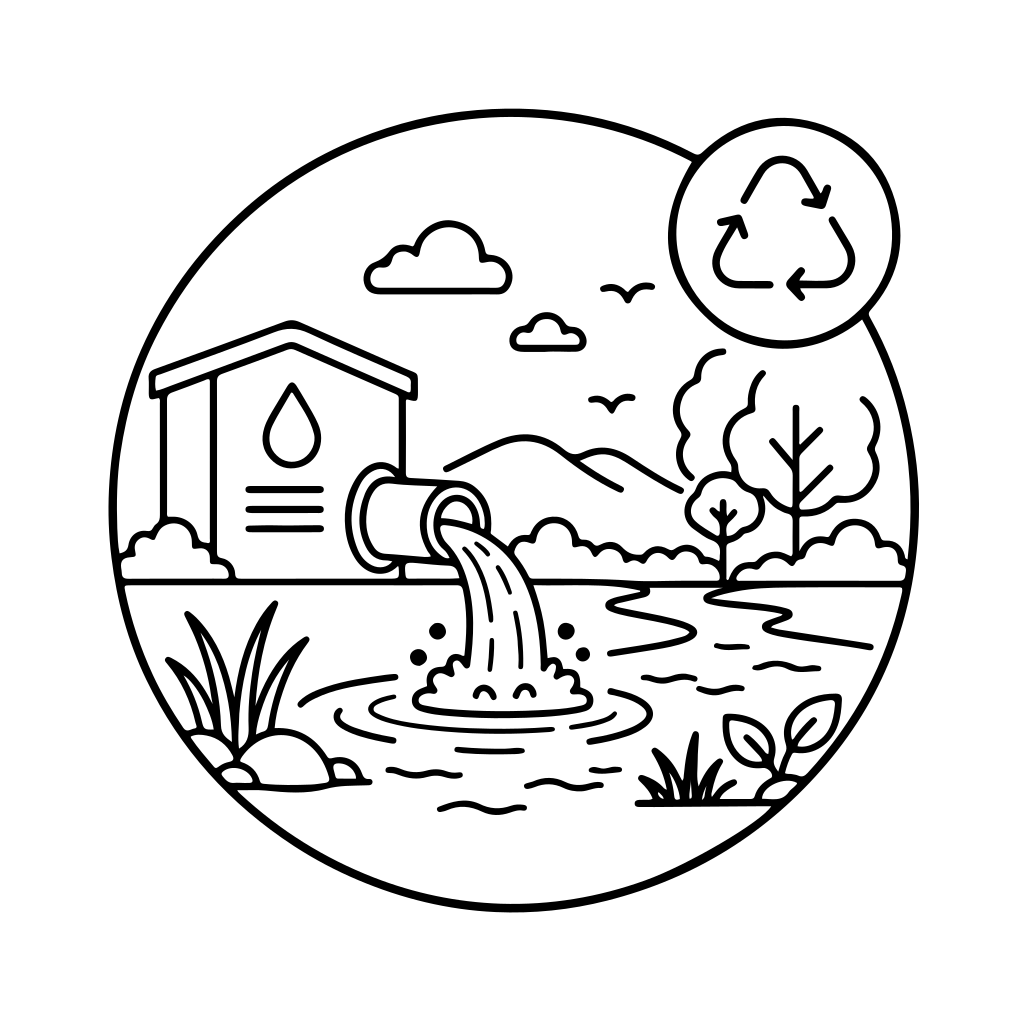
Safe Environmental Return
A Clear Path Toward Modern Infrastructure
Project Phases
Phase 1 — Planning & Community Partnership
FLOW works with local stakeholders to finalize project planning, secure funding partnerships, and coordinate with municipalities and regulatory agencies to prepare the project for responsible development.
Phase 2 — Infrastructure Installation
Packaged treatment systems are installed on secured land parcels, allowing modern wastewater infrastructure to be deployed efficiently while minimizing construction disruption for surrounding communities.
Phase 3 — System Operations & Community Benefit
Once operational, the system provides reliable wastewater treatment that protects public health, supports environmental stewardship, and creates new opportunities for agriculture, renewable energy, and rural economic growth.
Early Success and Next Steps
Community Readiness
FLOW is working with community stakeholders and funding partners to advance the first installation of this modern wastewater infrastructure model in rural New York.
Early planning work, site preparation, and funding exploration are already underway to support responsible project development.
Progress to Date
Completed feasibility study
Completed design plan
Solidified partnership agreement with NEED
Next Step
Present the wastewater design plan to the municipality for approvals
Help Strengthen the Case for Modern Infrastructure
Show Your Support for Water Infrastructure
Adding your name to the Community Support Registry helps demonstrate that residents support responsible wastewater modernization. This visible support shows that the community is ready to move forward with practical solutions.
Stay Informed About the Project
Infrastructure projects move through several phases of planning and development. If you would like to receive updates about the progress of this project, you can sign up to stay informed as new milestones are reached.
Connect With the FLOW Team
Your Questions, Clearly Answered
Will this project affect nearby homes or decrease property values?
No. FLOW’s wastewater facilities are designed to operate quietly and safely within rural environments. Treatment systems are located in one building on appropriately selected land parcels and operate within established environmental and operational standards.
In most cases, residents will not experience noticeable day-to-day changes. The goal of the project is to strengthen community infrastructure and strengthen property values while protecting the character and quality of surrounding neighborhoods. Modern wastewater systems reduce dependence on septic systems which is attractive to homebuyers.
Will the facility produce odors?
No. Modern packaged plant wastewater treatment technology is designed to minimize odors through enclosed treatment processes and advanced filtration systems.
Facilities are engineered to meet environmental standards and are routinely monitored to ensure they operate responsibly. In properly designed systems like those proposed by FLOW, noticeable odors are not expected for nearby residents.
How is the treated water kept safe for the environment?
Wastewater treatment systems are designed to remove contaminants and nutrients before water is safely returned to the environment. Modern treatment technology uses biological and filtration processes that meet environmental protection standards.
These systems help protect groundwater, rivers, and farmland by ensuring water is properly treated before reuse or environmental release.
Will homeowners in the Village and Town of Cambridge, NY be required to connect to the new system?
Community-scale wastewater infrastructure can support multiple types of connections depending on local planning decisions. If the Village and Town partner with FLOW to modernize the municipal wastewater treatment system, residents would be required to connect. If the Village and Town do not partner with FLOW, residents would not be required to connect. Installation of the new wastewater treatment facility would proceed but only accommodate the new planned development proposed by NEED.
Will this project affect local taxes or household costs?
FLOW and its partner NEED do not make taxation decisions.
Infrastructure projects like this are typically funded through a combination of funding sources, including state and federal infrastructure grants designed to support rural communities and alleviate costs.
Community support helps demonstrate readiness for these funding opportunities. The goal is to modernize infrastructure while keeping costs manageable for residents and local municipalities.
How large will the treatment facility be?
FLOW’s treatment systems are designed to operate at a scale appropriate for rural communities. Unlike large centralized sewage plants built for major cities, these systems use packaged treatment technology that requires significantly smaller facilities.
The exact footprint will depend on the specific project location and capacity needs—whether or not it accommodates the Town and Village of Cambridge, NY. Facilities are designed to fit within designated infrastructure sites while minimizing visual and environmental impact.
What kind of activity or traffic might residents see during construction?
During installation, residents may see typical construction activity such as equipment deliveries, site preparation, and infrastructure installation. Because FLOW uses packaged treatment systems, installation timelines are generally shorter than traditional wastewater infrastructure projects.
Once construction is complete, the facility operates quietly in one building with minimal ongoing traffic or activity.
Where will the treatment facility be located?
Treatment systems will be installed on property owned by NEED located in the Village of Cambridge. The selected land parcel is suitable for wastewater infrastructure and environmental protection.
The specific location has been evaluated based on environmental standards, access to infrastructure, and the ability to operate safely within the surrounding community.
How is this system different from traditional sewage plants or large urban systems?
Traditional sewage plants are typically large centralized facilities designed to serve major metropolitan populations. FLOW’s systems is significantly smaller and uses decentralized, packaged treatment technology designed specifically for small, rural communities.
This approach allows infrastructure to be deployed more efficiently, with smaller facilities, faster installation timelines, and the ability to expand capacity over time as community needs grow.
Who will own and operate the system?
Wastewater infrastructure projects are typically developed in partnership with developers, local municipalities and infrastructure operators who are responsible for long-term system management.
NEED owns the property. FLOW’s role is to help design, develop, and bring modern wastewater solutions to communities. Long-term ownership and operations are structured through appropriate public or infrastructure partnerships to ensure reliable service and responsible oversight.
How will water quality and environmental standards be monitored?
Wastewater treatment facilities must operate within established environmental regulations and monitoring requirements set by the NYS Environmental Protection Agency. Modern systems include continuous monitoring processes designed to ensure that treated water meets environmental protection standards.
Facilities are subject to regulatory oversight and environmental compliance requirements that help safeguard groundwater, rivers, and surrounding ecosystems.
How does community support help move the project forward?
Community support helps demonstrate that residents value modern infrastructure solutions for protecting public health and strengthening local communities.
When residents add their name to the Community Support Registry, it shows that the community is ready to move forward with responsible wastewater modernization. This support helps strengthen funding applications and signals to municipalities, partners and agencies that there is local interest in advancing practical infrastructure solutions.